
The best place to paint in Marrakech is not always the most famous landmark. Artists need a subject, but also time, permission, workable light and a position that does not interrupt daily life. Calm courtyards and gardens can produce stronger studies than the busiest market square.
Riad courtyards
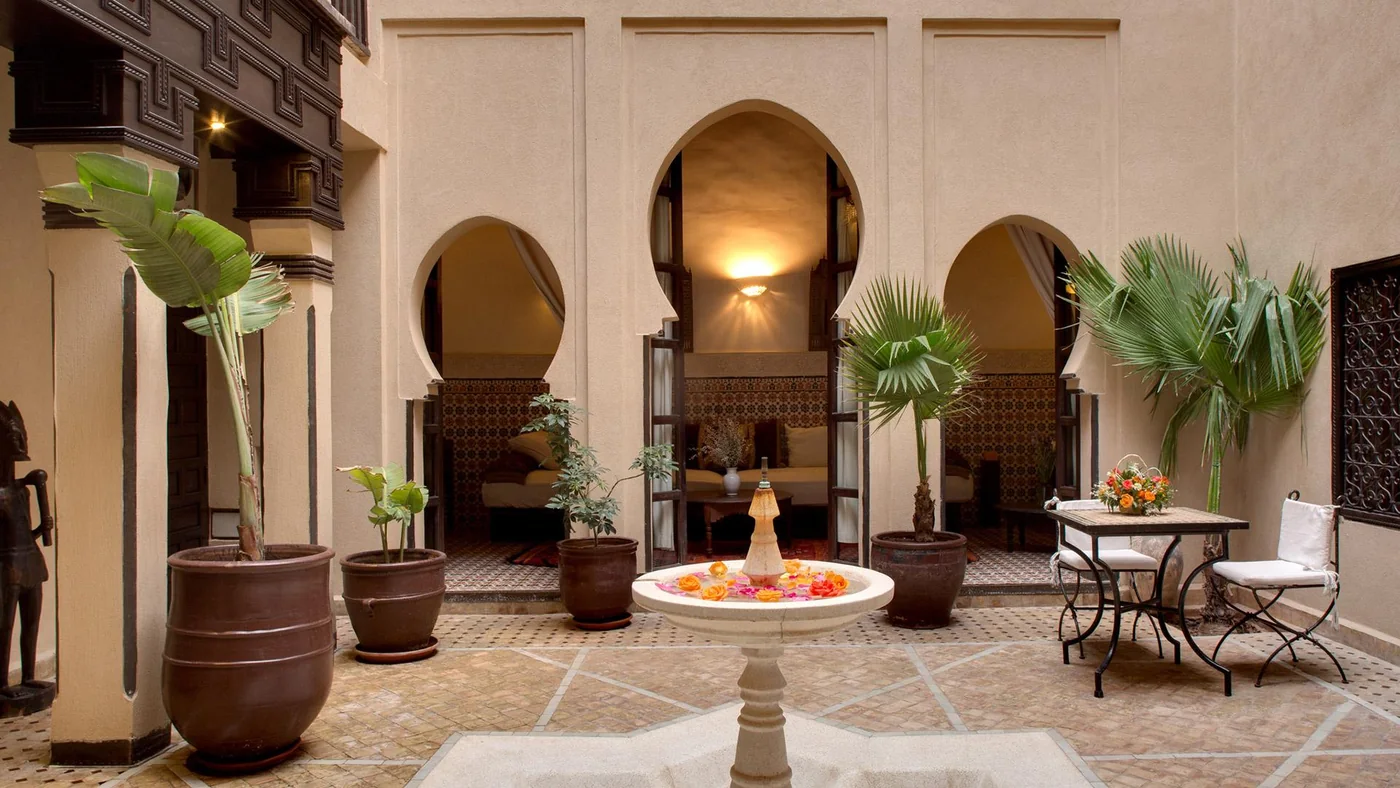
A riad offers repeated opportunities to observe the same architecture as light changes. Pools, tiles, planting, doorways and upper galleries create layered compositions. Because the setting is a home or business, ask the host where materials may be used and protect furniture and floors.
Gardens
Gardens offer foliage, paths, water and architectural fragments with more space to pause. Focus on one relationship—palm shadow over a wall, a cool path between warm forms, or reflected colour near water. Check opening rules and whether paints, tripods or prolonged sketching are permitted.
Historic architecture
Madrasas, palaces and museums can provide courtyards, carved surfaces and controlled light. They are also protected cultural spaces. Follow staff instructions, do not touch surfaces or block circulation, and use dry media if wet materials are restricted. A small line drawing with written colour notes can be developed later.
Souks and active streets
Busy lanes reward quick observation rather than a large setup. Work from a safe edge, keep belongings contained and make short studies of awnings, stacked goods, shadow shapes and movement. Never obstruct trade or entrances. Ask before portraying an identifiable person.
Rooftop views
Where access is permitted, rooftops can reveal the city as grouped planes rather than individual objects. Domes, terraces, palms and distant mountains can establish depth. Avoid leaning equipment over edges, respect neighbouring privacy and follow the venue’s access rules.
Museums and collections
Museums can deepen understanding of material, design and artistic history, even when painting is not allowed. Make written notes about pattern systems, colour relationships and context. Check photography and sketching rules for each collection rather than assuming one policy.
How to test a location in five minutes
- Can you stand or sit without blocking anyone?
- Is drawing or painting permitted?
- Where are the three largest values?
- What single relationship interests you?
- Will the light remain long enough for the study?
If the answers are unclear, make a thumbnail and move on. A sketchbook allows the city to remain active around you.
Bring the observation back to the studio
Collect a line sketch, value thumbnail, colour swatches and one photograph where allowed. Together they contain more useful information than a single highly detailed image. Develop the final painting in a calm setting where you can make considered changes.
For technique, read why Marrakech inspires artists. The current Marrakech watercolour retreat combines structured teaching with guided cultural observation; use the live page for the confirmed programme.