
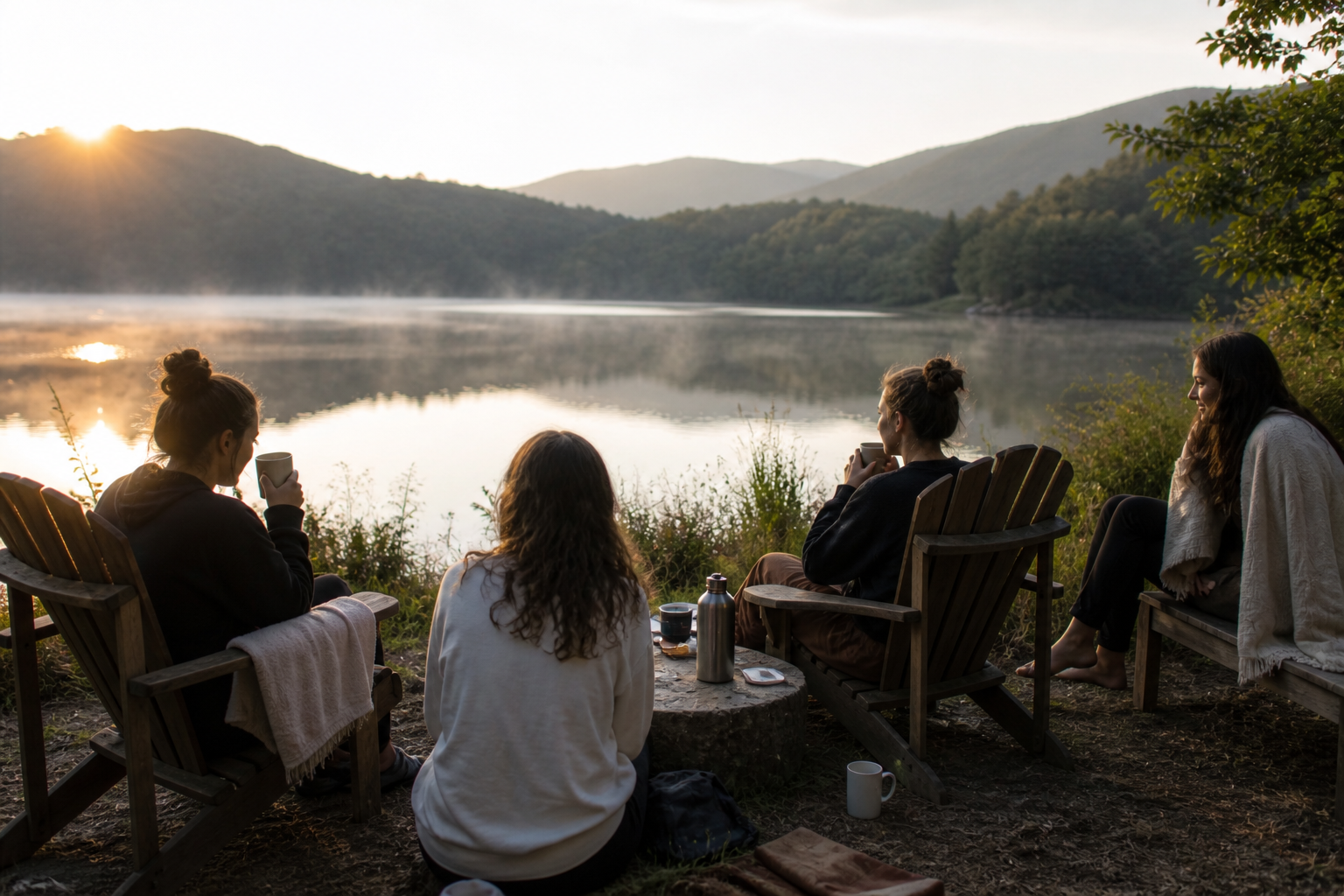
A creative retreat is not treatment and should not promise transformation. Its value is more practical: time away from routine, sustained attention to one activity, supportive company and permission to make work without turning it into a performance.
Attention changes the pace of a day
Painting asks you to notice edges, colour, proportion and change. That concentration can interrupt the habit of moving quickly between tasks. The benefit does not depend on producing a successful picture. Looking closely is already an active experience.
Structure reduces decision fatigue
A considered retreat organises core teaching, accommodation and selected activities. Guests still make personal choices, but they do not have to design every hour from scratch. Clear structure can make it easier to settle into creative work, particularly for someone returning to art after a long gap.
Challenge and support can coexist
Learning is not always relaxing. Watercolour may behave unpredictably, and comparison with others can appear quickly. A supportive tutor helps turn difficulty into a specific experiment: change the water, simplify the composition or try another edge. That approach can build creative confidence without pretending frustration disappears.
Shared activity creates natural connection
Conversation is often easier when people are doing something together. A group can talk about a subject, technique or place rather than relying on constant social performance. Quiet guests can participate through the shared activity, and independent time allows people to manage their energy.
Place can renew observation
A different visual environment interrupts familiarity. New architecture, light, plants and daily rhythms give attention somewhere concrete to go. Cultural context matters: the destination should be experienced respectfully, not used as a decorative background for a promise of personal change.
Rest must be present in the programme
A retreat cannot support restoration if every hour is filled. Look for breaks, unscheduled periods and realistic transitions. More activities do not automatically produce more value. Guests also need to consider their own sleep, medication, mobility and health requirements before travelling.
Choose claims carefully
Be cautious when a retreat claims to cure anxiety, heal trauma or guarantee life change without appropriate clinical provision. An art tutor or travel host should describe the programme they actually deliver. Anyone needing medical or mental-health support should seek advice from an appropriately qualified professional and assess whether travel is suitable.
What a credible creative retreat can offer
- protected time for creative practice;
- clear teaching and individual feedback;
- a manageable group;
- a balanced schedule;
- transparent practical information;
- respectful cultural engagement; and
- space for both connection and privacy.
Reconnect Journeys designs artist-led painting retreats around attentive practice, cultural context and a calm small-group rhythm. The current Marrakech retreat provides the exact programme, inclusions and booking details.