
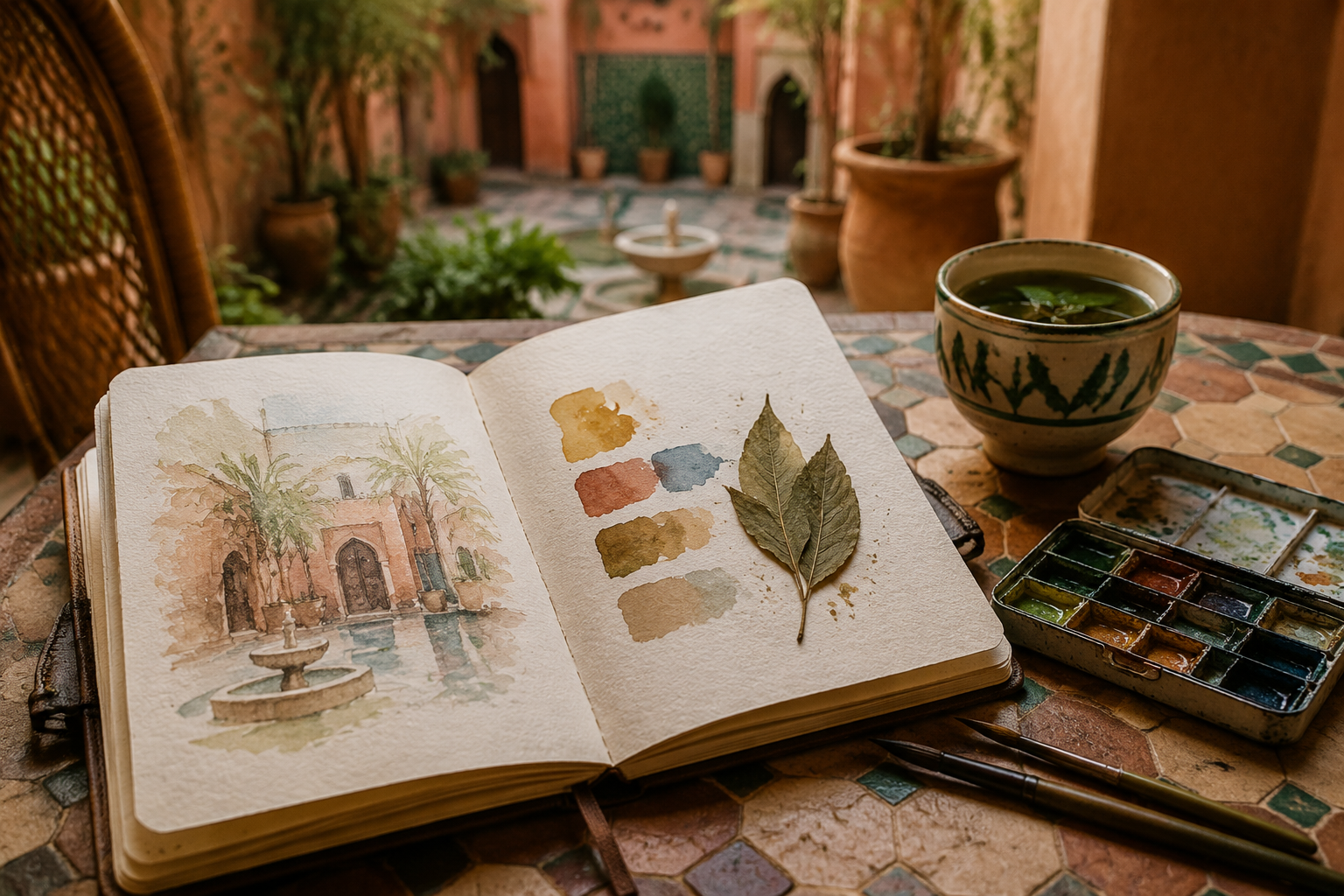
A watercolour travel journal is a record of attention, not a portable exhibition. Its pages can hold quick drawings, colour tests, maps, tickets, written observations and unfinished washes. The freedom to be incomplete is what makes it useful.
Choose a simple kit
Use a sketchbook that opens comfortably, a pencil or waterproof pen, a small palette, one or two brushes and a water container where appropriate. Test the paper and pen together before travelling. A limited kit reduces setup time and makes it easier to work briefly.
Design the page before filling it
Leave space around the first mark. A page can combine one medium sketch, two colour swatches and a few sentences without feeling crowded. Vary scale: a small detail beside a larger shape often communicates more than a single complete view.
Begin with value
Make a thumbnail using three values before adding colour. Identify the lightest shape, group the middle tone and place the darkest accent. This gives even a two-minute study a clear structure.
Use colour as evidence
Paint a swatch and label what it describes. Notes such as “warm wall, cool reflected shade” or “green neutralised by dust” preserve information a photograph may alter. You do not need to colour every object in the drawing.
Combine image and language
Write what the picture cannot show: temperature, sound, movement, the reason you stopped, or what changed while you worked. Avoid trying to sound literary. One accurate sentence can return you to the moment years later.
Three useful page formats
The observation page
One subject, a value thumbnail, colour notes and a short paragraph about light or movement.
The sequence page
Three or four very small sketches showing how a shadow, figure or view changed over time.
The collection page
Related details—doors, leaves, cups, signs or roof lines—drawn across the day without forcing them into one scene.
Work respectfully in public
Keep your setup compact, do not block movement and follow site rules. Ask before drawing a recognisable person. Accept refusal without argument. In museums, religious places and private properties, check whether wet media, photography or prolonged sketching is allowed.
Let mistakes remain visible
A journal records process. Correcting every line can remove the energy of observation. Add a second line, a note or a small test beside the first attempt. Pages become more informative when they show decisions changing.
Develop later paintings
After the journey, mark pages containing useful compositions or colour relationships. Combine several observations rather than copying one page exactly. The journal supplies firsthand evidence; studio time allows you to edit it.
For Morocco-specific methods, read the Morocco sketchbook travel guide. Structured travel-journaling and watercolour practice are part of the broader approach to our creative painting journeys.