
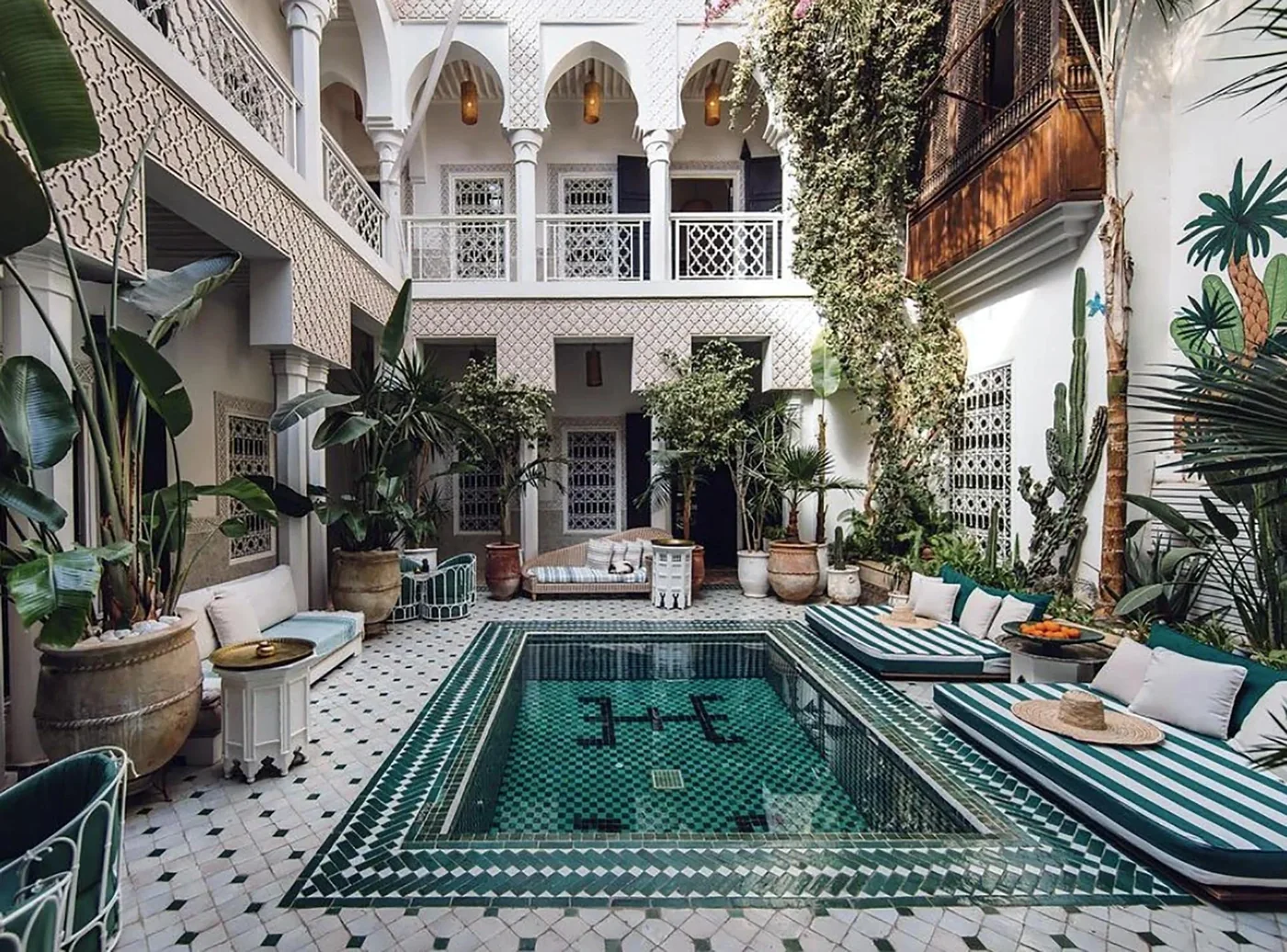
A Morocco sketchbook does not need to explain everything you saw. Its value comes from selection: the curve of a doorway, the relationship between two colours, the shape of a shadow or a written detail that a photograph would miss.
Choose a sketchbook you will actually use
A compact book that opens flat is usually more useful than a large format that stays in your luggage. If you plan to add watercolour, choose paper described as suitable for mixed media or watercolour and test it before travelling. A small clip can hold pages in a breeze. A pencil, waterproof pen and limited paint set are enough for most travel studies.
Begin with one decision
Busy streets can overwhelm because every object appears to demand attention. Decide what the page is about before drawing: perhaps one arch, three shadow shapes, a stack of baskets or a warm-and-cool colour relationship. Everything else can be reduced, written down or omitted.
Use thumbnails to understand composition
Draw three rectangles no larger than a postage stamp. In each, place only the largest light, middle and dark shapes. Change the crop each time. This quickly reveals whether the subject works vertically, horizontally or as a close detail. It also prevents you committing to a complicated drawing before understanding the structure.
Record colour without painting everything
Make small swatches beside a line drawing and label what you noticed: “wall in shade”, “faded green door”, “cobalt tile”. Colour notes are especially helpful because cameras may exaggerate saturation or neutralise warm reflected light. Our Morocco colour palette guide explains how to translate those observations into a restrained watercolour palette.
Work in layers of time
- Thirty seconds: one gesture or silhouette.
- Three minutes: the main shape and shadow.
- Fifteen minutes: a limited study with selected colour.
- Later: a larger painting developed from several notes, not copied from one photograph.
Short time limits create clarity. They also make it easier to work respectfully in active public spaces.
Add words when drawing is not enough
Write down sound, temperature, movement and the sequence in which you noticed things. A sentence such as “cool tiled floor after the bright lane” may guide a later painting more effectively than another photograph. Dates and location notes are useful, but personal observations give the journal its voice.
Sketching people respectfully
Use quick anonymous figures to show scale and movement. Ask permission before making a recognisable portrait, especially of children. Accept a refusal immediately. Avoid obstructing entrances, trade or worship, and follow instructions about photography or drawing in museums, historic sites and private properties.
Turn the sketchbook into a working resource
After travelling, mark pages that contain useful colour, composition or subject ideas. Combine information from several pages rather than trying to enlarge one sketch exactly. A travel journal is strongest when it remains evidence of looking.
For a broader process, read our watercolour travel journaling guide. If you would like structured teaching in Marrakech, see the current artist-led watercolour retreat.